

11.0 Life cycle planning continued
11.7 Drainage
This covers all the infrastructure that plays a part in draining surface water from the highway.
Condition
Assessing Condition
Damaged gullies are recorded during safety inspections, routine cleansing activities, other surveys or from public reports. Blocked ditches or roadside grips are, however, seldom noticed during safety inspections and problems are frequently discovered during the course of other works and/or via reports received from the public.
Piped systems, manholes, outfalls, attenuation systems, catchpits, soakaways and SUDS (sustainable urban drainage systems) do not have a regular inspection regime. Faults are only discovered following detailed inspections of the highway, reports by the public or when the system is in need of clearance or repair.
Current Condition
The condition of the visible, regularly visited sections of the network (e.g. gullies) is generally known and in reasonable order. However, the condition of the remainder of the network, which is largely underground, is less well known.
Desired Condition
The frequency of cleansing is designed to prevent water from accumulating on the highway, within the constraints of the Council’s budget. To assist in the achievement of this target, sites of known flooding have a higher frequency of cleansing.
Ideally, piped systems should be jetted on a cyclic basis to keep them clear and free flowing, rather than waiting for problems to occur. Grips should be fully functional whether connected to a ditch or as a soakaway. Outfalls should also be inspected on a cyclic basis and any necessary work completed on a planned basis.
Option Appraisal
Creation/Acquisition
The drainage asset is added to when new roads are constructed. New developments that are adopted by the Council as highway maintainable at public expense include drainage infrastructure.
Major maintenance schemes carried out on existing carriageways and footways often include enhancing the drainage of the highway and thus also add to the asset. Additional gullies are provided to deal with specific drainage problems.
Maintenance, Renewal or Replacement and Upgrading
The maintenance of highway drainage may be categorised as:
- Cyclic: e.g. gully emptying and cleansing of grips
- Reactive: e.g. clearing blocked gullies and repairing damaged ironwork.
- Planned: e.g. renewals and replacements of existing infrastructure. Very little planned maintenance is carried out for purely drainage purposes; it is usually associated with the maintenance of carriageways and footways.
Disposal or Decommissioning
Drainage items may be decommissioned because they are no longer required, for instance where a carriageway or footway is realigned, thus rendering existing gullies redundant. Where existing highway is Stopped Up, the drainage elements within that length of highway cease to be maintainable at public expense.
Budget Optimisation
Capital
When capital budget is used to improve the drainage asset, this is normally undertaken as part of major highway maintenance schemes.
Schemes developed to specifically improve drainage are assessed for priority against competing demands for capital funding. Drainage improvement schemes represent a small proportion of the total capital allocation.
Revenue
The revenue budget supports routine maintenance of the asset. The budget is allocated annually and is largely historically based. Revenue expenditure is monitored monthly against the relevant budget headings.
Performance Gaps
The drainage network inventory is incomplete and is not regularly updated. This causes problems when utilities request location details of underground apparatus. If such apparatus cannot be accurately located, there is a risk of damage to drainage pipes and other appuratus.
Frequent reports of flooding suggest that parts of the network are not in a desirable condition or is inadequate. Without regular inspections and cleaning cycles for piped systems, manholes, catchpits, soakaways and ditches, the condition of this asset is largely unknown.
The yearly frequency of mechanical roadside grip clearance keeps most grips in a reasonable condition. Debris often collects in the mouth, preventing the flow of water into the grip and it is difficult to clean through to the outfall ditch in several cases. Blockages are common, causing localised flooding and leading to public dissatisfaction.
The ironwork in the carriageway and footway is assessed during the safety inspections but only obvious defects are recorded. Ironwork in verges is not inspected, but problems are frequently reported by the public.
11.8 Street lighting
This covers all highway lighting associated with carriageways, footways, illuminated signs and bollards, zebra crossings and car parks. 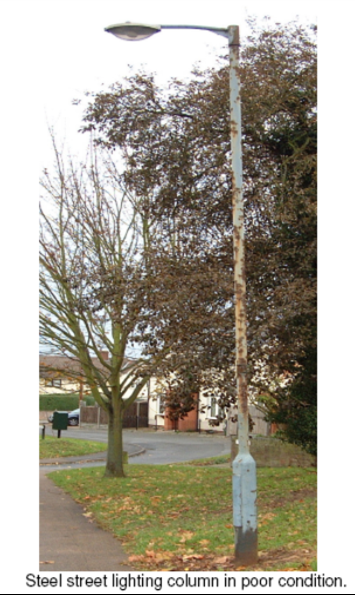
Condition
Assessing Condition
A percentage of columns receive an annual structural inspection in addition to six yearly electrical testing. These inspections are carried out by the public lighting service.
Current Condition
Desired Condition
From a safety point of view all equipment with less than 1 year’s residual life needs to be replaced in order to maintain the asset in a steady state.
Option Appraisal
Creation/Acquisition
Hartlepool’s lighting asset is increased when new roads are built.
New developments that are adopted as highway maintainable at public expense usually add to the lighting asset.
New development are generally covered by Section 38 or 278 agreements The street lighting team plays a significant part in ensuring the specification for all new developments meet the required standards to allow the local authority to adopt these assets.
Once adopted all items of street lighting furniture will be maintained by the Street Lighting section. This includes “standard maintenance” and “basic maintenance”. The latter includes basic fault repairs undertaken including lamp, fuse & minor component replacements, but all other maintenance is only carried out on receipt of an order.
Maintenance, Renewal or Replacement and Upgrading
The maintenance of lighting may be categorised as:
- Cyclic: e.g. cleaning of lanterns and painting of columns.
- Reactive: e.g. repairing faulty lamps and photocells and reacting to accident damage.
- Planned: e.g. obsolete column and lantern replacements and illuminated sign post replacements.
The Authority is currently undertaking a major project to have both its entire streetlighting stock converted to LED lamps and those columns over thirty years of age replaced.
Disposal or Decommissioning
Lighting may be removed when parts of the highway are Stopped Up. Lighting is also decommissioned when changes to the highway network require the reduction in number or relocation of lighting.
Performance Gaps
There are gaps in the inventory data held for this asset. This includes the installation dates (and hence age) of pre 1990 lighting columns in the CONFIRM database and information on the Council’s cable network.
From a safety point of view all equipment with less than 1 year’s residual life needs to be replaced in order to maintain the asset in a steady state. In subsequent years this will also need to include equipment that currently has 2 years residual life remaining.
11.9 Traffic signals and telematics
This covers traffic controlled by signals, some of which are linked together into an Urban Traffic Control (UTC) system, some others are remotely monitored and pedestrian crossing facilities controlled by signals.
Condition
Assessing Condition
Many of the signalised junctions and controlled crossings are connected to either the remote monitoring system or the urban traffic control system. The automatic reporting provided by this system allows the Council to assess trends and determine if remedial measures are needed to deal with recurring faults.
It is proposed that as part of the Maintenance Contract, the contractor will carry out an audit to verify equipment and condition at each site. These reports will comprise a condition questionnaire, a printout of the settings for the installation and a set of photographs.
The maintenance contract also allows for the reactive maintenance of one off faults and damage due to road traffic accidents.
Current Condition
Signalised junctions are generally considered to have a design life of about 10 years. Department for Transport London and the Regions (DTLR) rules oblige manufacturers to keep parts for each design for 10 years after manufacture ceases. In practice they tend to be available for less time than this. Replacement is therefore necessary at about 10 years otherwise faults can take much longer to repair.
Desired Condition
Although the best practice industry standard is a maximum age of 10 years, 15 years is not unreasonable and considerably reduces the risks associated with older installations.
This reduction of the asset age could form the basis of a target for improvement of this asset, for example reduce maximum asset age to 15 years in 3 years.
Option Appraisal
Creation/Acquisition
New telematics equipment is created when new roads are constructed, such as the Marina Way Development.
Integrated transport improvements, safety schemes, major schemes and new developments also add to the inventory of such equipment.
Maintenance, Renewal or Replacement and Upgrading
The maintenance of telematics may be categorised as:
- Cyclic: e.g. signals lamp changes every 6 months.
- Reactive: e.g. replacing blown lamps and replacing equipment damaged in accidents.
- Planned: e.g. upgrading equipment on the basis of age (Annual funding requirement has been identified to address programme of replacement as a result of the increase in number of installations)
Disposal or Decommissioning
Equipment is removed and decommissioned when it is no longer necessary. For instance, the installation of a new signalised junction with pedestrian crossing facilities may render a nearby pedestrian crossing unnecessary.
Budget Optimisation
Capital
Funding for new and improvement schemes may be generated through a bid as part of the LTP process.
Revenue
Budgets have been set historically, with some allowance for inflation.
The increased number of installations has had a major impact on the maintenance budget and the need for a programme of planned maintenance.
Performance Gaps
There is a significant percentage of transport telematics over the designed 10 year life span (85%), with 30% of these being over 25 years old.
There is always demand for more signalised crossings and signalised junctions. Government guidance is steering local authorities to upgrade Pelicans to Puffins to remove the flashing amber and the associated pedestrian vehicle conflict. No funding has been made available for this.
There is an existing funding gap. The current routine maintenance budget is insufficient to cover any replacements or renewals; the shortfall is currently due to a lack of non-routine (planned) maintenance budgets.
11.10 Public rights of way (PROW)
These cover all categories of Public Rights of Ways recorded on the register, known as the Definitive Map. This includes Footpaths, Bridleways and Byways Open to All Traffic (BOATs).
Condition
Assessing Condition
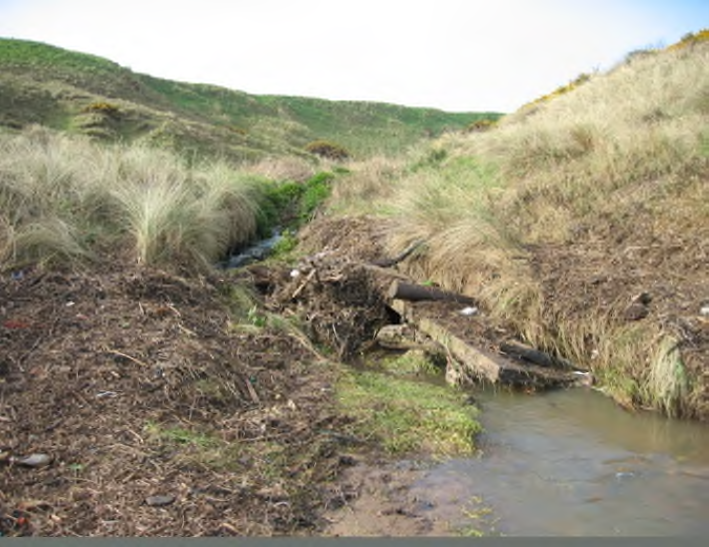
This bridge was washed away during heavy rainstorms. It is located at the coast close to Crimdon Beck.
Performance indicator surveys – 100% of the network is surveyed annually. Each path is surveyed completely against pass/fail criteria. Condition scores are determined based on national criteria set out in the BVPI standard (Good, Missing, Attention and Replacement required).
Reactive/Proactive Surveys - Hartlepool responds to reports on the state of the path network from a number of sources such as user/pressure groups, Parish Councils, the general public and Path Countryside Volunteers. Staff also undertake additional condition surveys.
Current Condition
ACS PI012 data has been gathered since 2009/10 (previously BVPI 178). The ‘ease of use’ result for 2009/10 was 84%. Conversely 16% of the network did not satisfy the easy to use criteria detailed above over the same period.
There is also circumstantial evidence from the general public that the state of the network is acceptable. The source of this information is the Rights of Way Improvement Plan (consultations with the Parish Councils, Landowners, User Groups and the General Public).
Desired Condition
Evidence from ACS PI012 sampling, requests from the public, user groups and parishes, and information gathered from recent consultations suggest strongly that the current condition of the asset is in accord with the desired condition. This includes signposting, waymarking and vegetation cutting.
There are no standards nationally for rights of way, for asset condition – the only requirement being the legal one that all paths should be signed where they leave the metalled road. For ACS PI012, Hartlepool Borough council is in the top quartile when compared with other authorities.
Option Appraisal
Creation/Acquisition
New paths can be created via a legal process that will add a route to the Definitive Map and Statement. Once added to the Map, the path maintenance and management becomes the responsibility of Hartlepool Borough Council. Such processes are rare. Legal diversions of routes are the more preferred use of Public Path Orders.
Maintenance, Renewal or Replacement and Upgrading
The maintenance of rights of way may be categorised as:
- Cyclic: e.g. surface clearance, vegetation clearance
- Reactive: e.g. repairs to damaged signs, stiles and path furniture etc
- Planned: e.g. replacement of outdated and irrelevant countryside furniture with up to date and accessible countryside furniture, waymarks, surface improvements etc
Disposal or Decommissioning
Although rights of way rarely cease to exist, there is a legal mechanism whereby they can be extinguished or stopped up. These legal processes remove the right of way from the Definitive Map and therefore from the use of the public. The process is known as a Public Path Order.
Budget Optimisation
Revenue
Primarily based on previous year's budget. Budget prioritisation processes exist to bid for additional funding as well as programme budget reductions. These do occasionally result in additional funding for projects that both benefit the countryside Access team and the Local Transport Management Team. Revenue funding covers the costs for mainly vegetation cutting, waymarking, signposting, resurfacing of small areas of rights of way and minor structural works.
Capital
Bids are made annually to the HBC LTP allocation, mainly for major refurbishments and surfacing works. The bid comprises a mix of essential maintenance and improvements.
11.11 Trees, hedges, verges and planted areas
The verges are the margins between the highway boundary and the paved surfaces. Any trees, hedges or planted areas that lie within the verges are the council’s responsibility.
Condition
Assessing Condition
Reports of dangerous or nuisance trees and hedges are received from highway inspectors, councillors and the general public. Trees maintained on the council’s behalf are inspected and if their condition is in doubt they will be given a detailed assessment by an arborist.
Current Condition
Tree Condition
A full condition survey of all Council highway trees was conducted during 2005 by an independent arboricultural consultant.
The following information was recorded:
- Species;
- Diameter at Breast Height (DBH);
- Condition survey, including major defects and an indication of immediate remedial work required to mitigate identified hazards.
- Prioritisation in terms of risk (high, medium, low)
- A broad indication of cost of remedial work required (broad indication of cost depending on work required, location, size of tree etc)
Recommendations for future inspection cycle regimes
Overall, the general condition of highway trees in the borough was found to be good. A full report was produced and handed to the Neighbourhood Services Department.
Following the adoption of the Hartlepool Tree Strategy 2011 – 2016 a cyclical programme of tree inspection including not only trees in parks and recreation grounds but also adjacent to highways and in public open space has been implemented. These inspections are carried out by the Councils own Arboricultural Officers with the resulting remedial works carried out by in-house tree work teams. This has meant that all publicly owned trees in Hartlepool are currently subject to a ground - based visual inspection on a three yearly basis.
Verges
Rural verges are cut twice yearly, usually starting at the beginning of May.
Additional cutting will be undertaken, if necessary, on safety grounds. There is a problem with overrunning of verges, which is unsightly and can lead to third party claims for wheel damage to vehicles. A further concern is the creeping of road width due to carriageway edge patching.
The Council maintains planted areas.
Desired Condition
All council highway trees are deemed to be in a sound and safe condition
All hedges cut back so that there is no obstruction to the highway or footway. Cutting back to be done outside the bird-nesting season unless it constitutes an immediate hazard. In cases where an immediate hazard has been identified cutting back will be done following consultation with the Council’s ecologist.
Make more contribution to urban verges to maintain them at an aesthetic standard. Rural verges to be cut 2 times a year to a 1.2 metre swathe but left uncut beyond this except where there is a specific safety, aesthetic or biodiversity related reason to do so. Visibility splays more often if they become a hazard.
Option Appraisal
Creation/Acquisition
Most new trees, verges and landscaped areas are planted by developers and are subject to the development control process before they are adopted by the authority as being maintainable at public expense. The development control procedure enables the Council to be sure that new trees, verges and landscaped areas have been planted to the requisite specification. Maintenance issues are considered as part of this process, with commuted sums being charged for items that attract particularly high maintenance overheads.
Not all trees and highway verges become the responsibility of the highway authority as some are designated public open space.
Processes are in place to ensure that new trees, verges and landscaped areas are placed on the Council’s records. These then become subject to the relevant inspection and cyclic maintenance regimes, as well as being integrated into the inventory data collection rolling programme.
Maintenance, Renewal or Replacement and Upgrading
The maintenance for this asset group may be categorised as:
Cyclic:
- Some urban trees are scheduled to be pollarded every 5 years.
- For urban verges, the full highway verge width receives approximately 16 cuts per year.
- All rural verges receive 2 cuts per year, for the first 1.2 metre swathe and visibility splays at junction, bends and signs. Rural verges are left uncut beyond the 1.2 metre swathe though additional localised cutting may be undertaken where required for safety reasons.
- A management regime has been devised by the Council for the roadside SNCI and those stretches of road verge of particular botanical interest.
The Council carries out cyclic maintenance on planted areas.
Reactive:
- Maintenance on highway trees is often a reactive service.
- For privately owned trees that pose a risk to safety, the owner will be contacted to undertake the work at their expense.
- Hedges will be cut back if they are dangerous on report from the public. Most hedges are owned by the adjacent landowner and if they fail to make the hedge safe the Council will carry out the work. (Note: hazards can exist with overgrown hedges)
- The Council generally maintains planted areas in urban areas and housing estates.
Planned:
- Very little planned maintenance (renewals or replacements etc) is undertaken on these assets. If the verge is over 1.2m wide, then the Council will plan to cut back the scrub and vegetation to the highway boundary every 5 years.
- Trees are planted in some urban areas to replace those that have to be removed due to “die-back” or because of likely property damage.
- Where evidence exists of persistent damage to highway verges consideration will be given to hard landscape.
Disposal or Decommissioning
Trees will generally be disposed of on safety grounds i.e. due to disease or damage.
In the vast majority of cases, verges and landscaped areas are expected to last in perpetuity. The only way that verge areas can cease to be highway is via the formal legal process called Stopping Up. It is very rare for verge areas to be stopped up other than those associated with new developments. Therefore the duties in terms of maintaining verges and landscaped areas continue to rest with the authority.
Removal of any hedgerow or part of a hedgerow will be subject to the terms of the Hedgerow Regulations 1997 and its subsequent amendments.
Budget Optimisation
Capital
There is usually a small annual allocation of capital funding for these assets. This comes about when planting or other maintenance is part of a capital scheme.
Revenue
The revenue budget supports routine maintenance of the asset and is based on inventory for verges and landscaped areas and historical precedence for trees and hedges.
Performance Gaps
There is a low level of annual expenditure on the maintenance of highway trees and hedges.
There are numerous requests from residents for lowering the height of trees or hedge cutting.
The current budget structure does not facilitate the easy analysis of actual expenditure trends against budget allocation.
11.12 Unlit signs and street furniture
This covers all the official non-illuminated street furniture that is intended to guide, inform or control the travelling public.
Condition
Assessing Condition
Both unlit signs and other items of street furniture are inspected as part of the regular saftey inspections that are carried out by the highway inspectors and other staff may also note the need for repair or replacement as part of their normal day to day highway duties. In practice it can be difficult to assess their condition when the prime objective of the inspection is to protect users of the highway from dangerous defects mainly in the carriageway or footway surface. Only obvious problems, such as dangerous signs and missing or damaged signs, are likely to be recorded during these safety inspections.
There are no specific detailed condition inspections undertaken on unlit signs anywhere on the network.
Current Condition
In most cases the condition of the signs and other street furniture will be checked and reported back and fed into the asset database as a part of the monthly inspections.
Desired Condition
All signs are visible and legible at distances which allow them to be read by highway users, as they pass at speeds appropriate to the type of road, during day or night. All missing or defective signs are to be repaired promptly.
Existing signage should be reviewed when completing an improvement on any given site. An inventory needs to be created and new assets added with a record of the type of asset and preferably a photograph. There should also be an on going review of all materials being used.
Option Appraisal
Creation/Acquisition
Amendments to the existing highway network may generate the installation of new unlit signs.
Hartlepool’s Unlit Signs asset is increased when new roads are built. For instance, the Hart Lane / Whiltshire Way Junction Improvement has added a number of new unlit signs to the highway inventory.
New developments that are adopted as highway maintainable at public expense usually add to the unlit signs asset.
Maintenance, Renewal or Replacement and Upgrading
The maintenance treatments for unlit signs may be categorised as:
- Cyclic:
At present there is no cyclic maintenance regime.
- Reactive:
Unlit Signs are cleaned and repaired upon report, although most signs are neither inspected nor cleaned.
Reflective Markers and Bollards are only cleaned and repaired upon report.
Missing or illegible signs are replaced, subject to budget, when reported by police, council staff or the public.
- Planned:
Very little planned maintenance (renewals or replacements etc) is undertaken on signs, reflective markers and bollards. In some cases signs and bollards may be replaced/upgraded as part of traffic management or safety schemes.
Disposal or Decommissioning
Unlit signs may be removed when parts of the highway are Stopped Up. Unlit signs are also decommissioned when changes to the highway network require the reduction in number or relocation of signing.
Budget Optimisation
Capital
When capital budget is used to improve or add to the asset, this is normally undertaken as part of a Traffic Management or Safety Scheme, e.g. speed restriction or accident prevention. These types of schemes represent a small portion of the overall annual capital allocation, but can add a considerable quantity of new signs to the highway inventory with no corresponding increase in the revenue budget to maintain them.
Revenue
The revenue budget supports routine maintenance of the asset and is based on experience of previous expenditure.
Performance Gaps
A full inventory for all unlit signs and street furniture, was last undertaken over three years ago.
The current condition of all unlit signs across the network is not known, but it is recognised that a proportion of this asset is not in a desirable condition.
The provision of speed restrictions across the borough and other traffic management and safety schemes are all funded from the capital budget, but with no corresponding increase in the revenue budget to maintain them.
Accident damage, vandalism and theft have all increased substantially in recent years, which means that many signs have to be replaced well before the end of their serviceable life. In many cases, there is no revenue budget available to fund their replacement and therefore many sign plates are left missing from posts.
Unlit signs are not inspected regularly; therefore damaged or missing assets will not be replaced unless noted by staff or reported by the public.
There is no check undertaken on sign “loss of reflectivity” at either installation or subsequent cleaning / inspection.
There is a lack of funding for renewals of unlit signs, markers and bollards when they become damaged or are missing. This can lead to a poor impression of the maintenance of this asset in some locations.
11.13 Barriers and safety fences
Pedestrian and safety barriers are provided to separate and protect various categories of highway user from each other, e.g. guardrails near traffic lights separate pedestrians from vehicles; safety barriers on central reservations of dual carriageways separate opposing flows of traffic. Barriers may be provided to protect the highway user from specific hazards, e.g. bridge parapets, embankments.
Condition
Assessing Condition
Safety barriers are routinely inspected on a bi-annual basis.. Pedestrian barrier defects will only be repaired if they are picked up during routine carriageway / footway safety inspections or reported by members of the public.
All other types of fences are not inspected and therefore the condition of these assets is only known from observation by council staff or public report.
Current Condition
There are a number of types of pedestrian barriers (guardrails) used for differing circumstances. Some of those that serve to protect the public from vehicles at junctions or other constrictions are vulnerable to vehicle impact and are repaired if in a dangerous condition. Timber barriers and fences are subject to vandalism and may need repair or replacement. All defects identified during safety inspections are repaired as a matter of urgency.
Desired Condition
Fences and barriers should be in a serviceable condition and fit for their purpose. All substandard safety fencing should be replaced. Where required, barriers should be re-painted at appropriate intervals to extend components expected life.
Option Appraisal
Creation/Acquisition
Amendments to the existing highway network, or changes in legislation, may generate the installation of new Pedestrian and Safety Barriers.
New developments that are adopted as highway maintainable at public expense can add to the Barriers and Safety Fences asset.
Maintenance, Renewal or Replacement and Upgrading
The maintenance treatments for Barriers and Safety Fences may be categorised as:
Reactive:
- For safety barriers and pedestrian barriers, dangerous sections will be made safe within 24 hours and permanent repairs are targeted for completion within 28 days. Repair within 28 days is often not achievable as this is often carried out by specialist contractors.
- Very little planned maintenance (renewals or replacements etc) is undertaken on safety fences or barriers.
Disposal or Decommissioning
Pedestrian and Safety Barriers may be removed when parts of the highway are Stopped Up. They are also decommissioned when changes to the highway network require their reduction in number or relocation.
Budget Optimisation
Capital
The capital budget is derived from Central Government as part of the LTP process. The Council may allocate capital funds in order to fund improvement or maintenance works that upgrade the asset. The Traffic Management or Safety Engineering Teams will usually generate any proposal for significant additional fencing, (excluding that undertaken as part of larger road schemes).
Revenue
The revenue budget supports routine maintenance of the asset and is based on historical precedence. A summary of current capital and revenue expenditure is shown in the table below:
Performance Gaps
A full inventory survey for all safety and pedestrian barriers across all road classes has not been undertaken since 2003. The current condition of all safety fences was determined by a survey conducted by Durham County Council in September 2013, the resultant information was entered into the CONFIRM system so a maintenance history is obtained.
There are areas where there are inadequate or non-existent fences, dictating the need to develop a comprehensive register of highway hazards in higher risk areas in order to assess the need for additional safety fencing and barriers.
The current process for capturing asset damage caused by vehicle accidents etc prevents the recovery of costs in many cases.
There is a lack of funding for renewals of barriers and safety fences when they become damaged or are missing. This can lead to a poor impression of the maintenance of this asset in some locations.
11.14 Road markings and studs
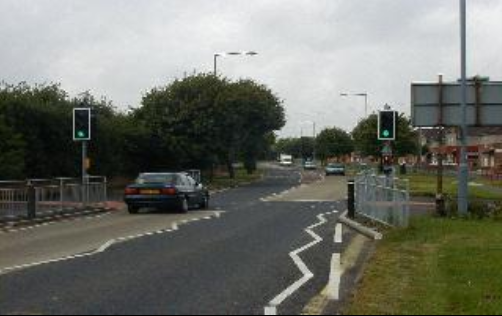
Road markings cover all forms of white and yellow lines or symbols and may be thermoplastic screed or paint. Road studs are the “cats eye” equivalents used to indicate the centre or edge of a road.
Inventory
There is no formalised system for collecting, maintaining or updating inventory data relating to road markings and studs. There is, however some limited information in respect of regulatory markings.
Condition
Assessing Condition
The Council currently monitors the condition of Road Markings and Studs during the periodic safety inspections of the carriageway.
Desired Condition
All of the asset should be maintained in accordance with the standards laid out in the Highway Network Management Plan.
The layout of road markings and studs should always be assessed prior to renewal and following road resurfacing or surface dressing.
Option Appraisal
Creation/Acquisition
Amendments to the existing highway network, or changes in legislation, may generate the installation of new Road Markings and Studs.
New developments that are adopted as highway maintainable at public expense can add to the Road Markings and Studs asset.
Maintenance, Renewal or Replacement and Upgrading
The maintenance treatments for Road Markings and Studs may be categorised as:
Cyclic:
- The repair / renewal of existing road markings and studs on the highway network is undertaken following safety inspections.
Reactive:
- Reinstatement of existing road markings and studs. Sites are inspected following a report from the public, council staff or police and repair work may then be programmed depending on budget.
- Very little planned maintenance (renewals or replacements etc) is undertaken on road markings and studs. In most cases this work is only undertaken on parts of the network when re-surfacing or surface dressing is completed.
Disposal or Decommissioning
Road markings and studs may be removed when parts of the highway are Stopped Up. Road markings and studs may also decommissioned when changes to the highway network as a result of legislation, mandatory requirements or road safety schemes are required.
Budget Optimisation
Capital
When capital budget is used to improve the asset, this is normally undertaken as part of a highway maintenance or traffic safety scheme.
Revenue
The revenue budget supports routine maintenance of the asset. The predicted need is based on experience of previous expenditure.
Performance Gaps
A full inventory and condition survey of all road markings and studs has not been undertaken, however there are records available on the location and type of TRO markings.
The maintenance standards listed in the Highway Network Management Plan adopt a priority system for the reinstatement of markings. Consequently a large proportion of the asset on the non-principal road network is not in a desirable condition. Regular reports from the police and public, together with our own safety inspections, confirm this.